
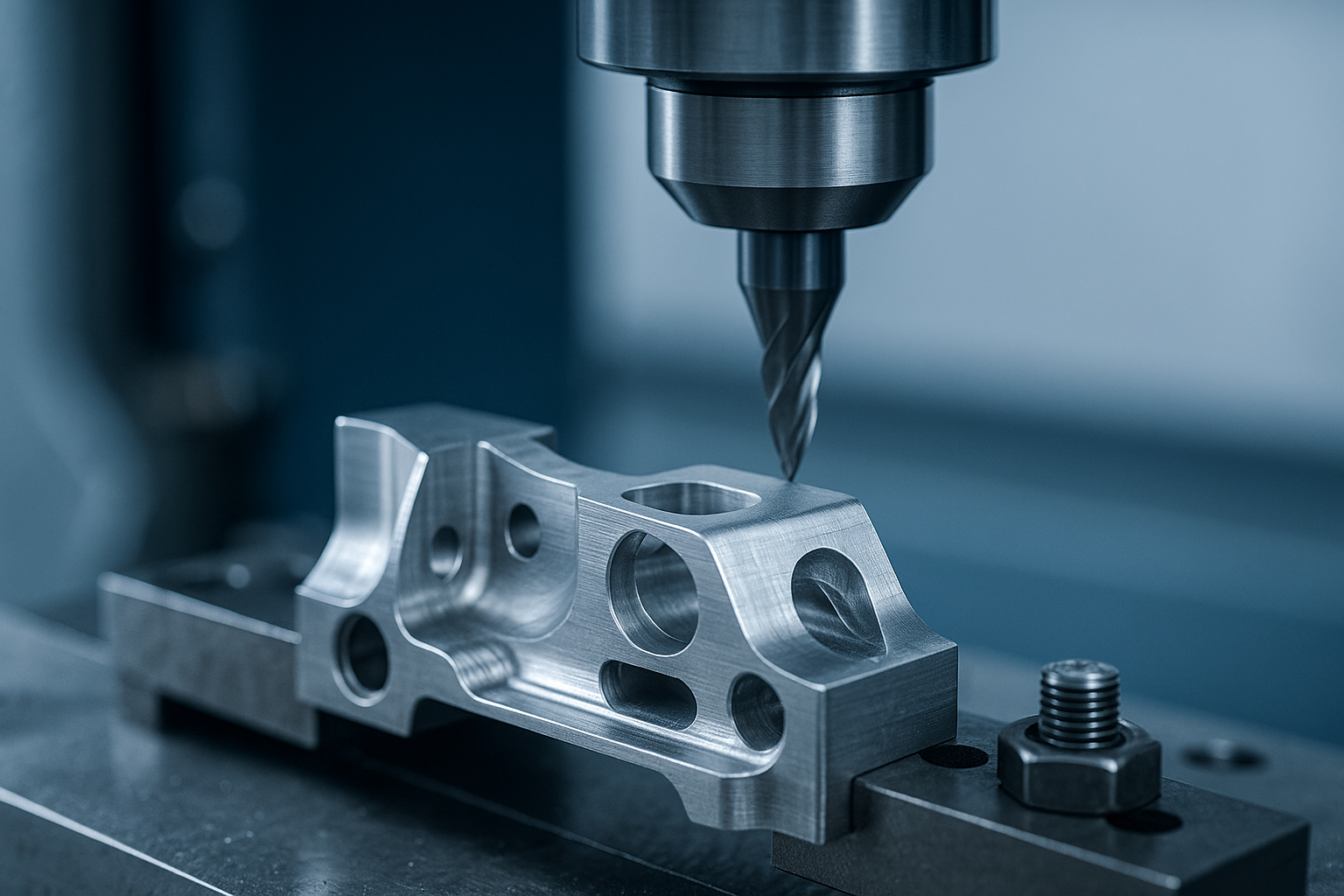
What is precision engineering?
Definition and differentiation from precision mechanics and micromechanics
History and development of precision engineering
Central principles: Precision, tolerances in the micrometer range, surface quality
Precision engineering is based on three basic principles. First and foremost is precision. It means that components are manufactured exactly to specification – without deviations that could impair their function. Closely related to this are
The third principle is surface quality. Smooth and flawless surfaces are not only visually important, but also crucial for the biocompatibility, hygiene and wear resistance of components. A surgical instrument must not only be sharp and stable, but also easy to clean and keep sterile. This is precisely where it becomes clear why precision mechanics is far more than just “precise craftsmanship” – it is the basis for safety, quality and reliability in highly sensitive applications.

The role of precision mechanics in medical technology

Why precision can make the difference between life and death
In medical technology, precision not only determines the quality of a product, but often directly determines the life of a patient. A pacemaker whose contacts deviate even minimally could lose its function. Similarly, a surgical instrument cannot be used reliably without precise edges. The accuracy of fit in the micrometer range ensures that devices function smoothly, implants are safely integrated into the body and diagnostic devices deliver reliable results. Even the smallest errors in production would have far-reaching consequences, which is why precision engineering plays an irreplaceable role in this area.
Typical applications – from surgical instruments to implants
The range of applications is wide. In surgery, minimally invasive instruments such as endoscopes or trocars are used, which work through the smallest of access points and meet the highest requirements in terms of surface quality and stability. Precision mechanics are just as crucial for implants such as dental implants, orthopaedic screws or stents, as these components have to function reliably in the body for years. Precise manufacturing also ensures that doctors can work safely and accurately with highly sensitive devices such as catheters or drilling templates for operations.
Patient safety and quality assurance as top priority
Precision engineering in medical technology primarily serves patient safety. Every production step is therefore documented and checked in accordance with strict standards such as ISO 13485. Quality assurance here means not only adhering to tolerances, but also checking functionality, hygiene and durability. Only if components are manufactured without deviations can devices be prevented from failing in everyday clinical practice. This creates trust for doctors and patients, as every instrument or implant used meets the highest standards.
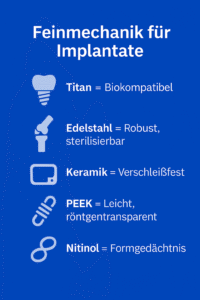
Connection to biocompatibility and material selection (titanium, stainless steel, ceramic, PEEK, Nitinol)
The choice of materials is just as important as the manufacturing process itself. Titanium is considered a classic for implants because it is biocompatible and corrosion-resistant. Stainless steel is often used for surgical instruments because it is easy to sterilize and robust. Ceramic impresses with its hardness and wear resistance, especially for joint components. PEEK, a high-performance plastic, offers the advantages of lightness and X-ray transparency. Nitinol, on the other hand, is ideal for stents and other flexible implants due to its shape-memory properties. Precision engineering ensures that these materials are processed with the utmost precision so that their specific properties can be optimally utilized.
Technical processes in medical precision mechanics
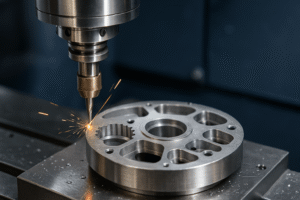
CNC machining: Milling, turning and drilling in the micrometer range
CNC machining forms the foundation of modern precision mechanics in medical technology. With high-precision milling and turning machines, complex geometries with tolerances in the micrometer range can be realized. This accuracy is necessary to produce components that not only fit with millimeter precision, but also remain permanently stable. When drilling micro-channels in catheters or manufacturing tiny screws for implants, it becomes clear how important the combination of speed, repeatability and absolute precision is.
Spark erosion cutting and die sinking – when materials reach their limits
Not all materials can be processed conventionally. This is where spark erosion comes into play. Even the hardest materials such as ceramics or hard metals can be shaped precisely using processes such as wire erosion or die sinking. This technology is particularly impressive in medical technology, where extremely small cavities and intricate contours are required. The material is removed without contact via electrical discharges, which makes it possible to achieve perfect results even with materials that are difficult to machine.
Precision laser cutting for filigree structures
Laser cutting opens up possibilities that would be almost impossible to achieve with mechanical processes. With beam guidance in the micrometer range, the finest cuts can be made without damaging the surrounding material. This technology is indispensable for medical applications such as stents, filters or delicate springs. The combination of high speed, minimal material loss and smooth cutting edges makes precision laser cutting a key element in the manufacture of modern medical devices.
Additive manufacturing and 3D printing: opportunities and limitations in medical technology
Additive manufacturing opens up new avenues in prototype development and the production of individual solutions. Complex structures can be realized without the use of additional tools, which is particularly advantageous in individual medicine. Nevertheless, there are limits: in many cases, surface quality and accuracy do not reach the level of conventional processes. This is why 3D printing is often used in combination with post-processing methods to adapt medical components to the strict requirements of the industry.
Metrology and quality control – coordinate measuring technology, optical processes, clean room environments
Precision manufacturing is only as good as its control. In medical technology, metrology is therefore one of the decisive steps. All components are checked using coordinate measuring machines, optical processes and high-resolution microscopes. The parts may only be further processed or used if the measurement data matches the design specifications. Clean room environments also guarantee that products remain free from contamination – a decisive factor for patient safety.
Typical products and components in medical technology
Surgical instruments and minimally invasive tools
Every detail counts during surgical procedures. Scalpels, scissors and clamps must be precisely sharpened and perfectly balanced so that doctors can work with precision. In minimally invasive surgery, precision mechanical instruments such as trocars, endoscopy tools and special forceps are also used. They move through tiny access points in the body, which is why dimensional accuracy and surface quality are crucial. A smooth, hygienic surface reduces the risk of infection and facilitates sterilization.
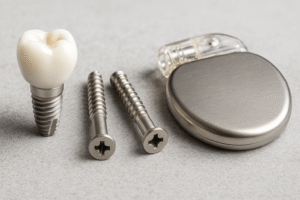
Implants: Dental implants, orthopaedic screws, pacemakers
Implants depend on long-term stability and biocompatibility. The fit of dental implants must be absolutely precise so that they can be securely anchored in the jawbone. Orthopaedic screws and plates require maximum resilience as they have to withstand mechanical forces in the body for years. Pacemakers, on the other hand, are highly complex systems in which precision mechanical contacts and housings must guarantee absolute reliability. Each component is manufactured in such a way that it remains permanently stable and at the same time withstands the biological conditions.
Endoscopy and imaging systems – optical precision in the micrometer range
Optical precision engineering plays a key role in endoscopes and imaging procedures. Lens systems, mirrors and moving elements must be manufactured in such a way that even the smallest structures in the body are imaged with pin-sharp clarity. The requirements for surface quality are extremely high, as any irregularity would impair the image quality. In combination with high-resolution electronics, these components enable interventions that were previously impossible and significantly improve patient safety.
Prototype production and small series for research and development
In addition to series products, prototype production plays a central role. New ideas in medical technology can only be tested if precise sample parts are available quickly and reliably. Precision engineering enables the production of small series that are used in clinical studies before a product goes into mass production. This flexibility is a major advantage, particularly in the development of innovative implants or diagnostic devices. Researchers can validate their concepts and doctors can work with realistic test systems.
Quality, standards and regulation

ISO 13485, MDR and CE marking – what manufacturers need to consider
In medical technology, there is a clear framework of regulations without which no product is allowed on the market. ISO 13485 is the most important standard for quality management systems in this area. It requires seamless control of all processes from development to delivery. The EU’s Medical Device Regulation (MDR) further tightens these requirements by demanding transparency and traceability over the entire life cycle of a product. Only when all requirements have been met can a product bear the CE mark and thus be approved for the European market.
Quality management and validation of medical devices
Effective quality management is not an option, but a duty. Every production step is documented and validated to ensure reproducibility. In addition to pure production, this also includes tests such as stress tests, sterilization procedures or the simulation of application scenarios. Validation ensures that a medical device not only functions reliably in theory, but also in practice. This process reduces risks and strengthens the confidence of users and patients.
Challenges in biocompatibility and long-term stability
Medical products must not only be manufactured with precision, but must also last in the body over the long term. Biocompatibility means that the material does not cause any undesirable reactions and integrates into the biological environment. This is where materials such as titanium or PEEK come into play, which have been used successfully for years. Nevertheless, testing for long-term durability remains challenging. Abrasion, corrosion or material fatigue can occur over many years and must therefore be excluded or minimized during the development phase.
Why reliability and documentation are crucial for approval
Approval is hardly conceivable without comprehensive documentation. Authorities require proof that every component, every batch and every test report is traceable. This traceability ensures the reliability of the product and makes it possible to quickly identify possible sources of error. In a sensitive environment such as medical technology, this is essential. Manufacturers who take the utmost care here not only create regulatory security, but also trust among clinics and patients.
The future of precision mechanics in medical technology
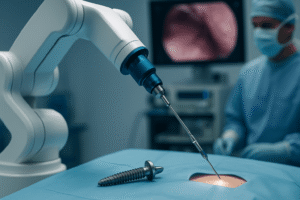
Miniaturization and nanotechnology
There is a clear trend towards miniaturization. Devices are becoming smaller and smaller, while at the same time the requirements for functionality and durability are increasing. In nanotechnology, structures in the nanometer range are being manufactured that can be used for new diagnostic and therapeutic procedures. One example is tiny valves or microchannels in lab-on-a-chip systems that analyze blood or tissue samples in real time. These advances open up completely new possibilities in personalized medicine and make precision mechanics an indispensable driver of innovation.
Integration of microsensors and piezo technology in implants and devices
The next generation of implants will not only work passively in the body, but will also actively provide data. Microsensors record vital signs, monitor the healing process or report possible complications at an early stage. In combination with piezo technology, implants can even generate electrical signals to stimulate tissue or provide energy for sensors. Such technologies turn classic implants into smart systems that combine therapy and diagnostics. Maximum precision and biocompatibility are crucial here to ensure that the function remains reliable in the long term.
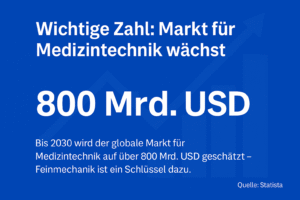
reach USD 800 billion. A key driver of innovation:
Precision mechanics for precise, durable and biocompatible components. Source:
Statista – Medical Technology worldwide
Robotics and AI-assisted surgery: increasing demands on precision
Surgical robots have become established in many operating theaters. AI-supported control systems can perform movements that are far more precise than human hands. This development poses new challenges for precision mechanics: Instruments need to be even more delicate, flexible and wear-resistant. At the same time, the demand for tolerances in the micrometer range is increasing, as even the smallest deviations could impair the performance of such systems. The combination of robotics, artificial intelligence and precision engineering opens up perspectives that will change surgery in the long term.
Sustainability and new biocompatible materials
In addition to technological advances, sustainability is also playing an increasingly important role. Manufacturers are increasingly focusing on biocompatible materials that are not only well tolerated in the body but can also be produced in a resource-saving manner. Materials such as biodegradable polymers or new types of ceramics are being researched in order to make implants more environmentally friendly in the long term. Production processes themselves are also being optimized, for example through energy-efficient machines or the reduction of waste. In this way, the precision engineering of the future combines maximum precision with ecological responsibility.
Bridge to practice: Swiss precision as a success factor
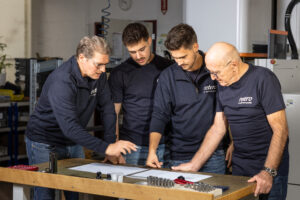
Why specialized providers like Retero make the difference
In medical technology, the choice of partner determines success or failure. Specialized suppliers such as Retero GmbH not only contribute state-of-the-art technologies, but also decades of experience in micromachining. While many manufacturers reach their limits with complex materials or delicate structures, experts deliver solutions that meet the high demands of the industry. It is precisely this specialization that makes the difference when precision, quality and adherence to deadlines are required.
From micromachining to the finished medical device – one partner for the entire process
Retero covers the entire process chain. From high-precision laser cutting, wire erosion and die sinking to CNC milling and turning – every process is implemented using state-of-the-art technology. The production of prototypes or small batches is also part of the range of services before a product goes into regular production. Companies thus benefit from a partner who not only supplies individual components, but also accompanies them from the idea to the ready-to-use medical device.
Customized solutions with ISO 13485 certification
Another advantage is the consistent focus on compliance and quality. With ISO 13485 certification, Retero meets the strict specifications for medical technology and guarantees that every part meets the regulatory requirements. At the same time, projects are individually tailored to the customer’s needs. Whether prototype, small series or contract manufacturing on a larger scale – the focus is on tailor-made solutions. This combination of precision, certification and flexibility creates security and trust.
Invitation to the next step: consulting, prototype development and contract manufacturing
If you want to take the step from theory to practice, you need a partner who combines technological expertise with practical advice. Retero supports customers right from the concept phase, develops prototypes and reliably implements the requirements in contract manufacturing. This results in direct added value: ideas reach the market faster, development cycles are shortened and the products meet the highest standards. Companies that value Swiss precision will find the right partner here to successfully implement projects.