
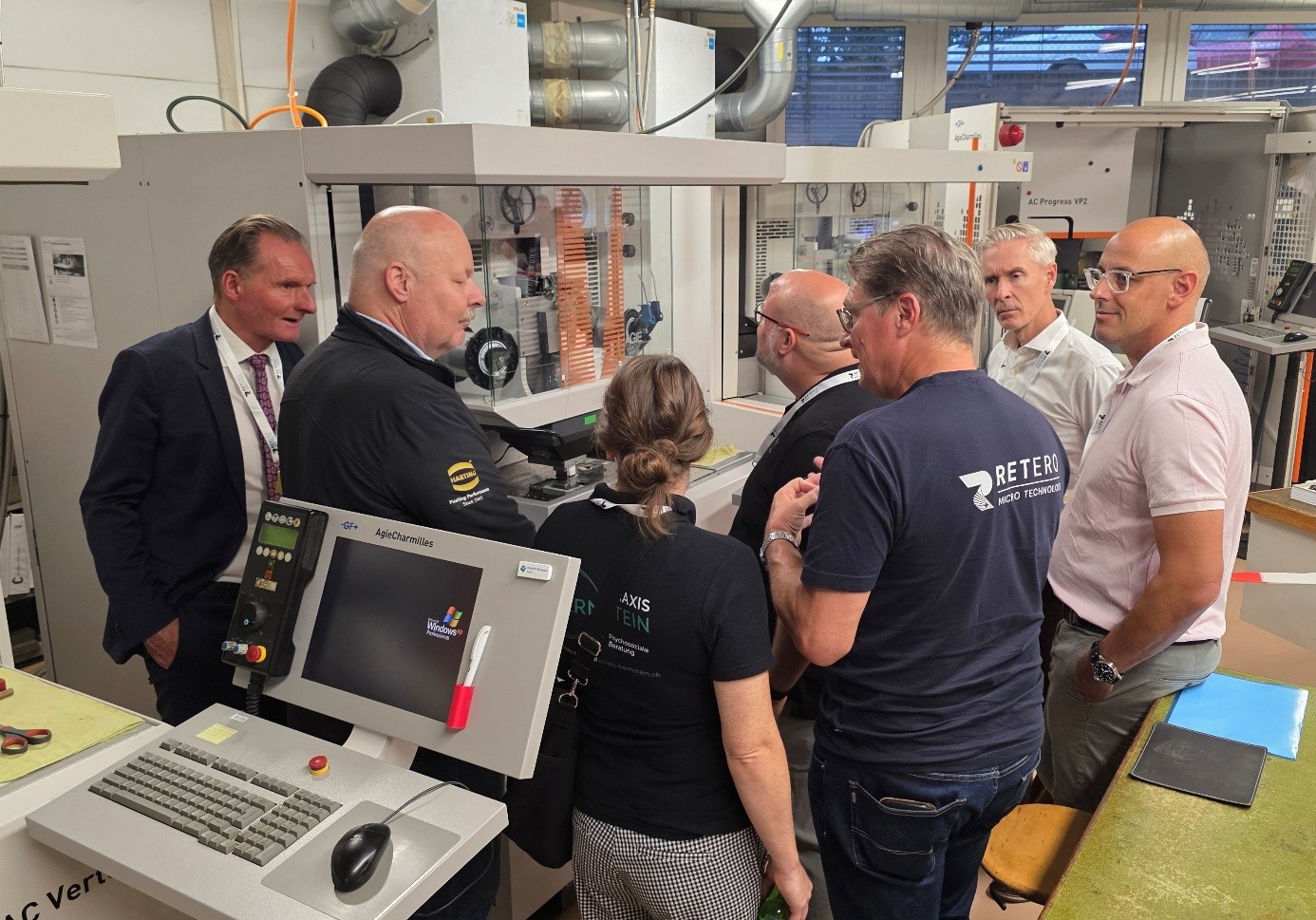
What a human hair, a Swiss German “Mü” and a hot wire have to do with micromechanics: a look back at the business reception of the Gewerbeverein Cholfirst.
Just how thin is a human hair? And what does a hot-wire foam cutter have to do with high-precision metalworking? That was what the business reception of the Gewerbeverein Cholfirst, our local trade association, was all about. For the evening, we opened the doors of Retero GmbH. Lots of guests came, and we wanted to show them what we work on every day: micromechanics, micro-drilling, wire EDM and precision down to thousandths of a millimeter.
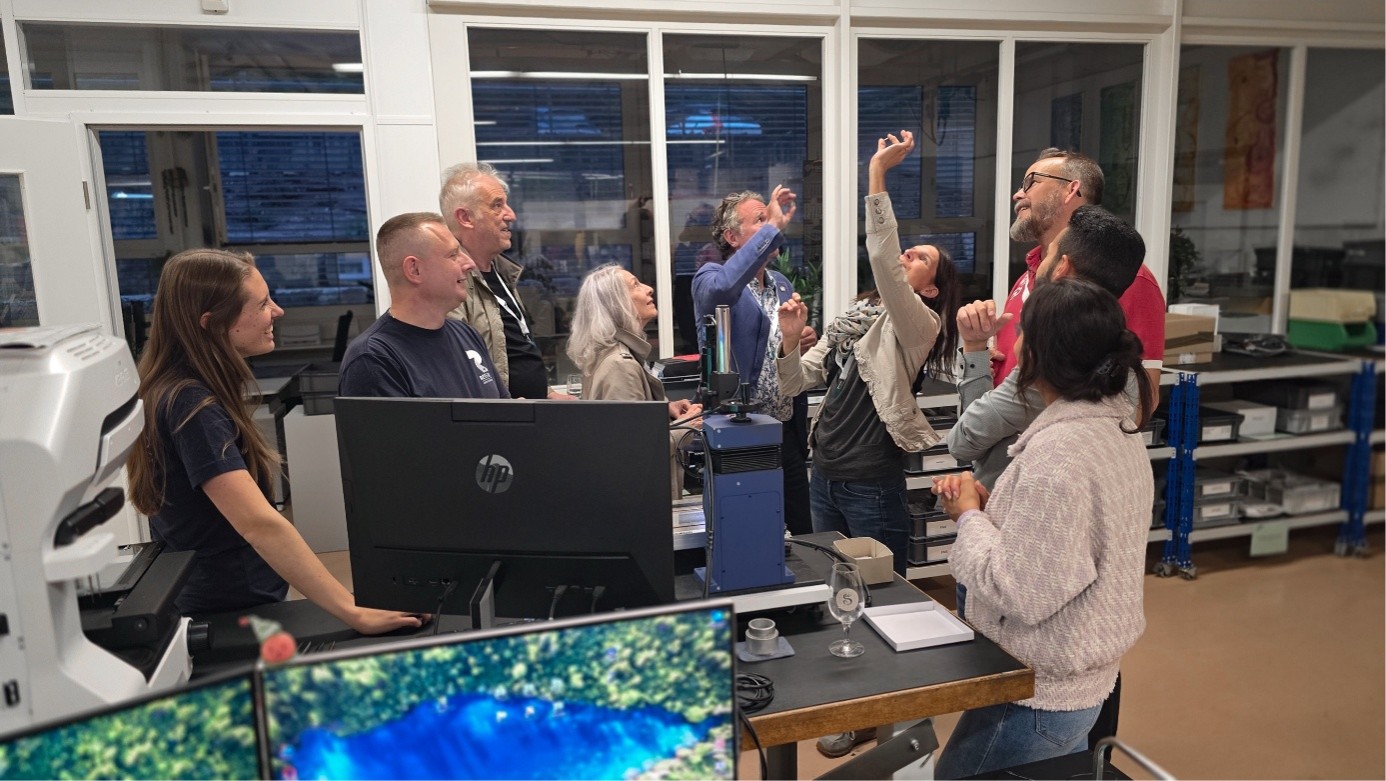
Just watching wasn’t the plan, though. Our guests guessed along, tried things out themselves and were amazed more than once.
How thick is a human hair, and how small can we go?
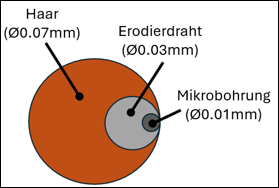
We kicked things off with a few quiz questions. The first one: how thick is a human hair? On average, a hair is about 0.07 mm in diameter. To the naked eye, that already looks very fine. For us, it’s nowhere near the limit. At Retero, we produce micro-holes just 0.01 mm in diameter. That’s about seven times smaller than a hair.
Put another way: if a hair were made of metal, seven of our smallest holes would fit side by side across its cross-section. That was the moment many of our guests were truly amazed.
What is a “Mü”? The micrometer, explained simply
The next question was about a word every Swiss German speaker uses: “Mü”. You hear it all the time, as in “Rutsch mal ein Mü” (scoot over a tiny bit) or “Da fehlt noch ein Mü Salz” (it needs a touch more salt). But what exactly is a Mü?
There were four possible answers: the sound a cow makes, a micrometer, one millionth of a meter and one thousandth of a millimeter.
The answer surprised a lot of people: three of the four are correct. “Mü” comes from the Greek letter µ (mu), the symbol for “micro”. So when Swiss Germans talk about “a Mü”, they actually mean a micrometer (µm). And a micrometer is one millionth of a meter, or one thousandth of a millimeter. Only the cow got it wrong.
In everyday speech, a Mü simply means “a tiny bit”. For us, it’s a very real unit of measurement. We work with tolerances of ±0.001 mm every day, which means a deviation of one micrometer at most. That takes modern machines, but above all experience and a sharp eye for detail.
A micro-hole in a 5-centime coin: who can find it?
Our next example showed how hard it is to see dimensions like these with the naked eye.
We drilled a micro-hole 0.05 mm in diameter through the eye of the portrait on a Swiss 5-centime coin. Then we gave our guests a challenge:
“Somewhere on this coin, there’s a hidden micro-hole. Who can find it first?”
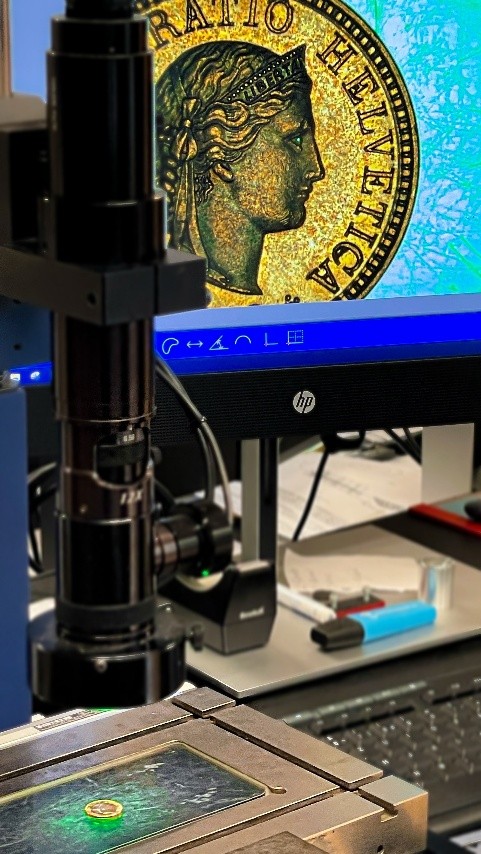
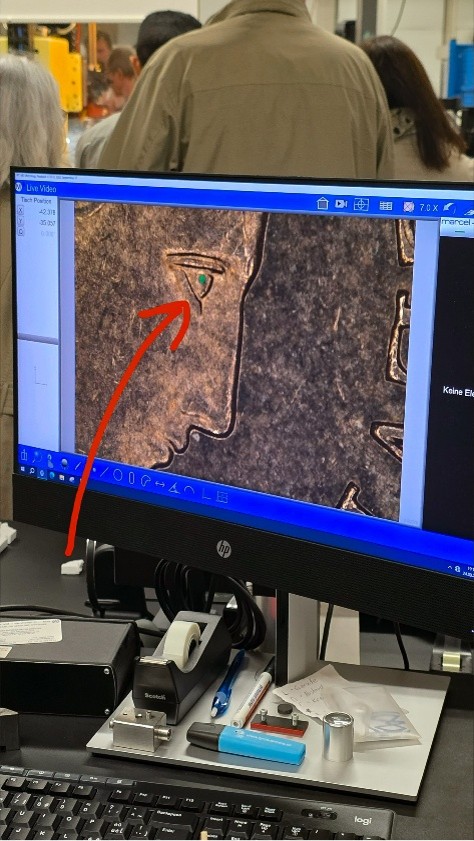
Even though this hole is five times larger than our smallest ones, it was barely visible. Only a few people spotted the tiny opening right away. There’s hardly a better way to show the scale we work at every day at Retero.
How does wire EDM work? Explained with a hot wire
Besides micro-drilling, we also wanted to show how we manufacture. Most people have at least heard of milling and turning. Micro-EDM, wire EDM and sinker EDM (EDM stands for electrical discharge machining) are a different story. Only a few guests could picture right away what these processes involve.
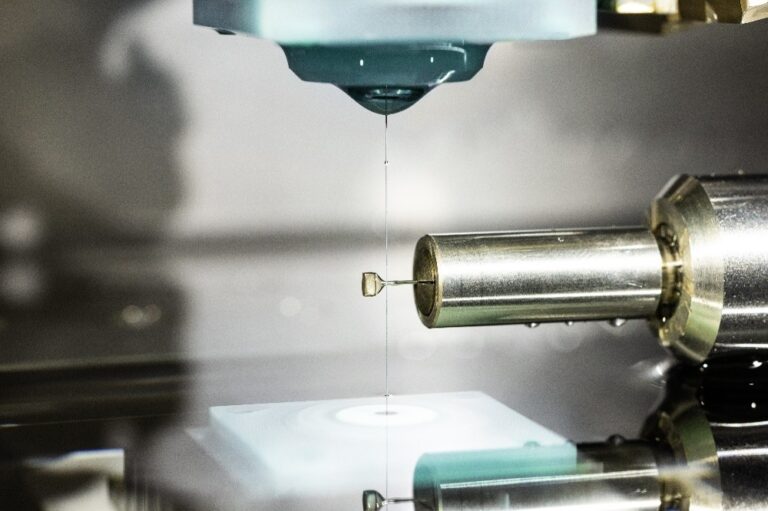
So we explained wire EDM with a tool many people know from DIY projects: a hot-wire foam cutter.
The principle is similar. Just as the hot wire glides through the foam, a very thin wire moves through the workpiece in wire EDM. The key difference: the metal isn’t simply melted away. Instead, electrical discharges between the wire and the workpiece remove tiny amounts of material in a controlled way. This makes it possible to cut even complex contours from electrically conductive materials with very high precision. It looks simple in the model. In practice, it’s a manufacturing process where every micrometer counts.
Threading the EDM Wire: A Steady Hand Required
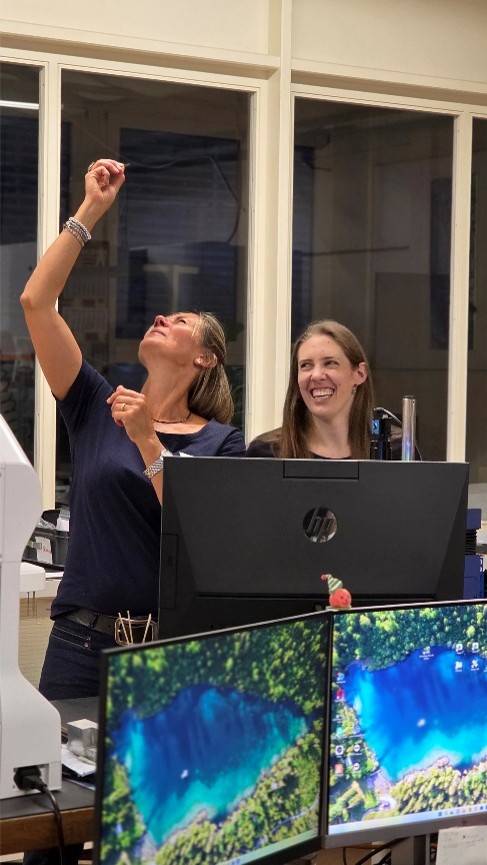
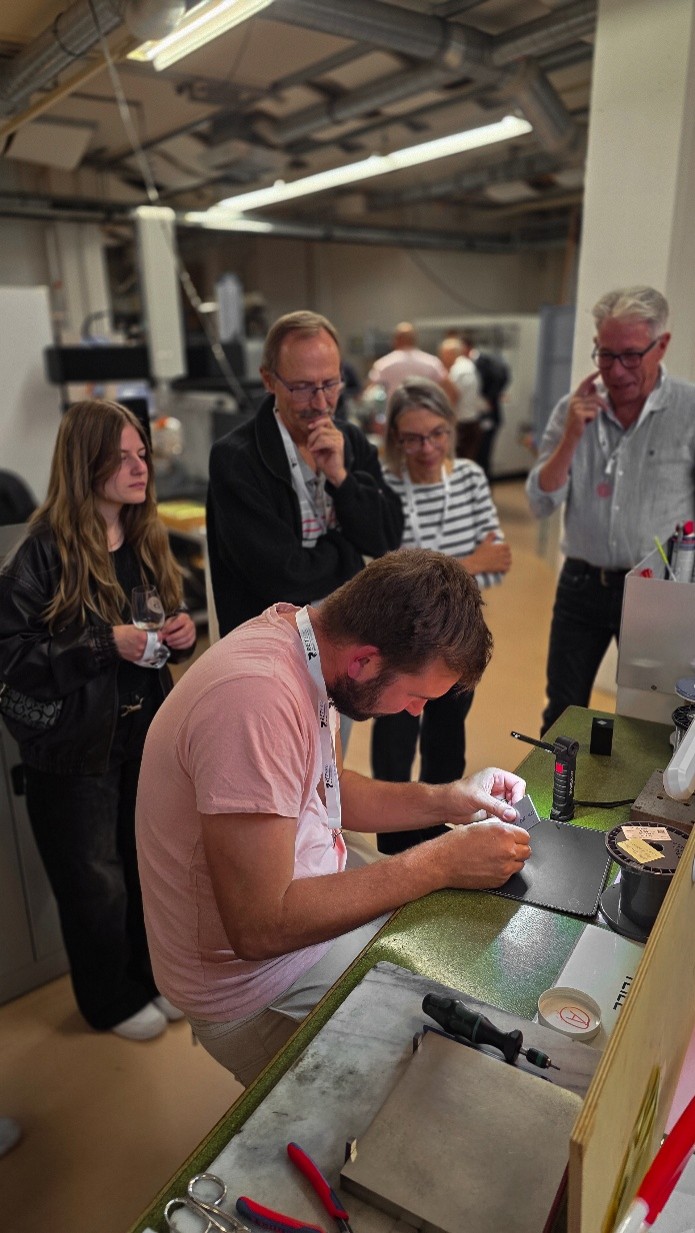
Then it was our guests’ turn. The task: thread our EDM wire, just 0.04 mm thick, through the pre-drilled start hole in a metal block.
Sounds easy, but it isn’t. It takes patience, good eyesight and a very steady hand. And even then, it doesn’t always work on the first try.
Why does wire EDM need a start hole?
A start hole is needed whenever you want to create an internal contour. Take the inside contour of a gear: you obviously don’t want to cut the gear open from the outside to get there. So first, a small start hole is made and the wire is threaded through it. From there, the desired contour is machined with precision.
After this exercise, everyone could see how much finesse even one small step in the process takes.
Threading the EDM Wire: A Many industries, one shared curiosity
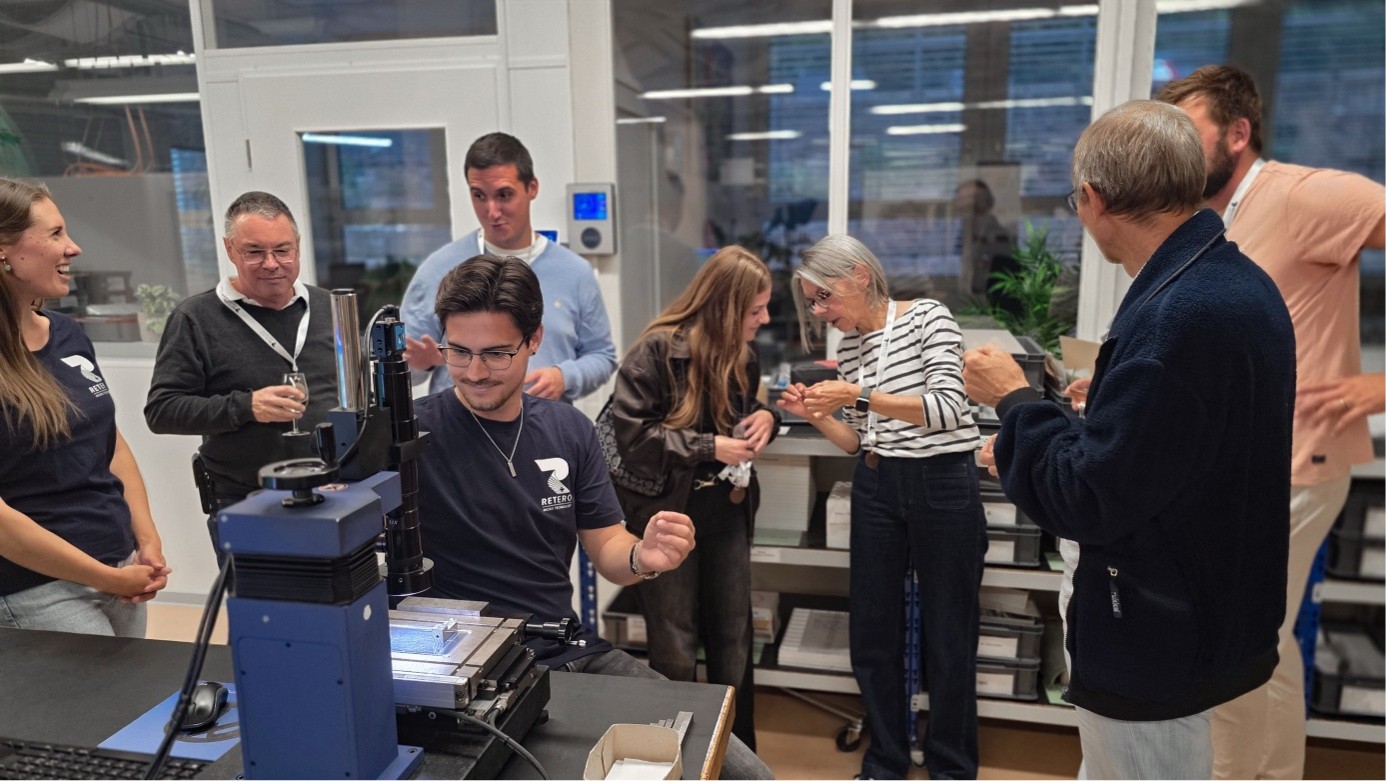
Most of them had never had much to do with micromechanics. That made it all the more fun to make our work tangible, answer questions and get talking across industry lines.
That’s exactly what a business reception is for: you meet people from the region, find things in common and get a look into professions you would otherwise rarely come across.
Good food and local wine to round off the evening
And of course, there was plenty of time to socialize. Bedabeck took care of the delicious food, and fellow members of the Gewerbeverein provided the wines.
A heartfelt thank you to Weingut Besson-Strasser, 8247 Weinbau AG and Weingut Lindentröpfli for the excellent wines and a lovely end to the evening.
Thank you for a wonderful evening
We look back on an evening full of curious faces, great questions and lively conversations. It was a real pleasure to share our passion for micromechanics and precision with people from so many different fields.
A big thank you to Pascal and the Gewerbeverein Cholfirst for the opportunity to open our doors, and to all our guests for their interest and the open exchange.
We look forward to showing you again what’s possible on a small scale.
The Retero team